- Project
- Client Work
- Industry
- Travel & Hospitality
- Scope
- Website strategy, UX architecture, Custom design & development, SEO & content architecture, Editorial system, Destination & property discovery, Booking pathway strategy
01
The Challenge
Haunted travel has an unusual discovery problem. Someone who wants to stay somewhere with a haunted reputation has to piece the trip together from hotel websites, tourism sites, paranormal blogs, generic listicles, historical sources, Reddit threads, ghost-tour websites, and booking platforms. None of them answers the whole question on its own: where can I actually go, what happened there, what do people report experiencing, and how do I plan the trip?
The challenge was to turn a niche topic into a genuinely useful travel platform rather than another paranormal blog. There was also a credibility problem to solve. Historical fact, local folklore, and reported paranormal experiences are routinely presented online as if they carry the same weight. A travel resource that wanted to be trusted couldn't do that.
02
The Strategy
We built around travel intent, not ghost stories alone. Every part of the site is designed to move a visitor from curiosity to discovery to research to trip planning, along one connected path: destination, haunted stay, reported experiences, nearby places and tours, editorial guides, booking.
That structure lets editorial and commercial content support each other. Journal guides aren't a blog bolted onto a directory; they answer the questions people ask while planning, then link into the destinations and stays those questions lead to. Booking is the last step of the journey, not the purpose of every page.
- Haunted stay guides, destination guides, and Journal articles are distinct page types, each designed for a different stage of planning
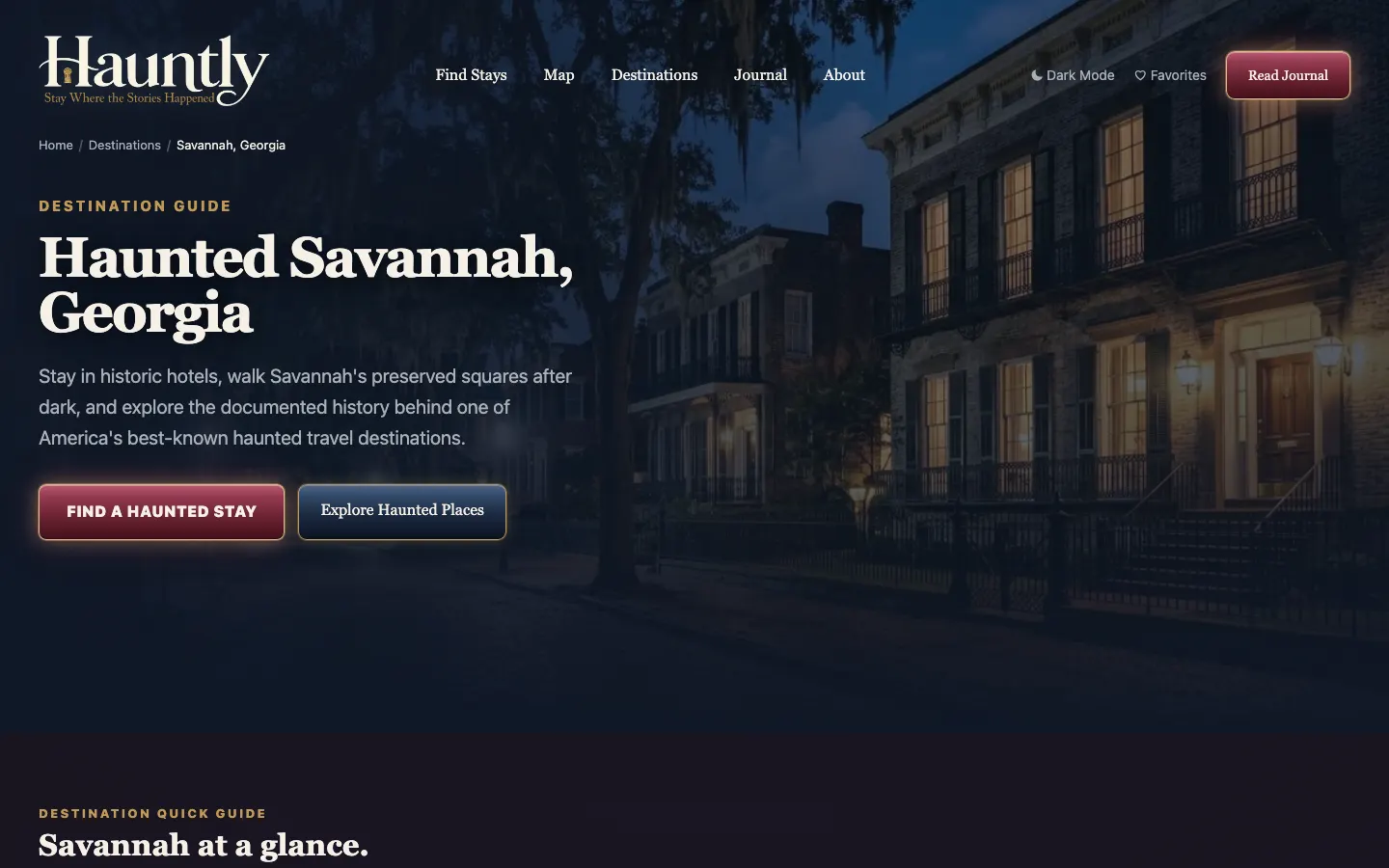
- Destination guides act as hubs, gathering a city's stays, haunted places, tours, and guides in one place
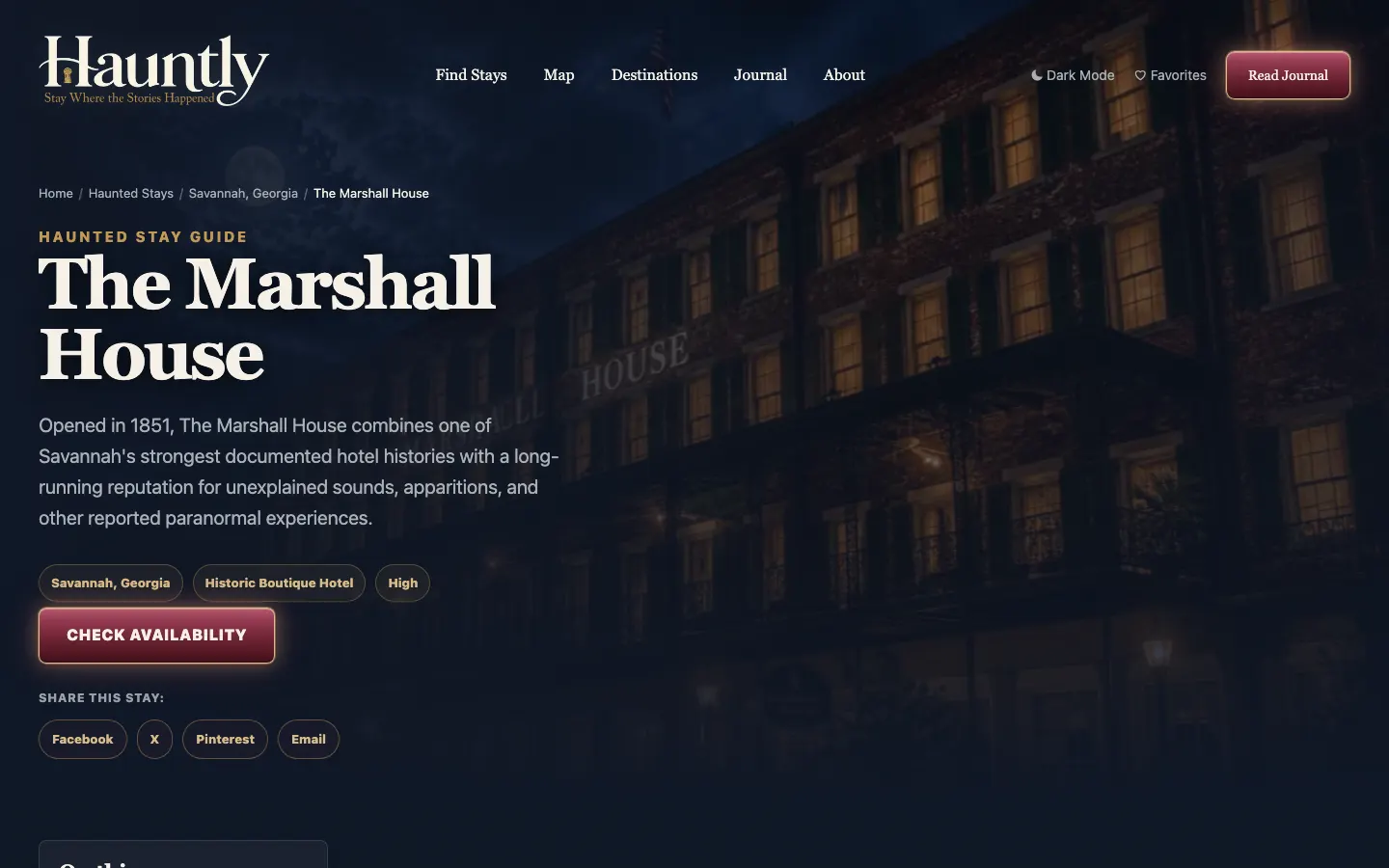
- Every stay guide ends in a clear Check Availability action that goes to the property's own booking site
- The structure is ready for affiliate booking relationships, with a published Affiliate Disclosure that commits to page-level disclosure if and when they're added
03
The Experience
Atmospheric, not theatrical
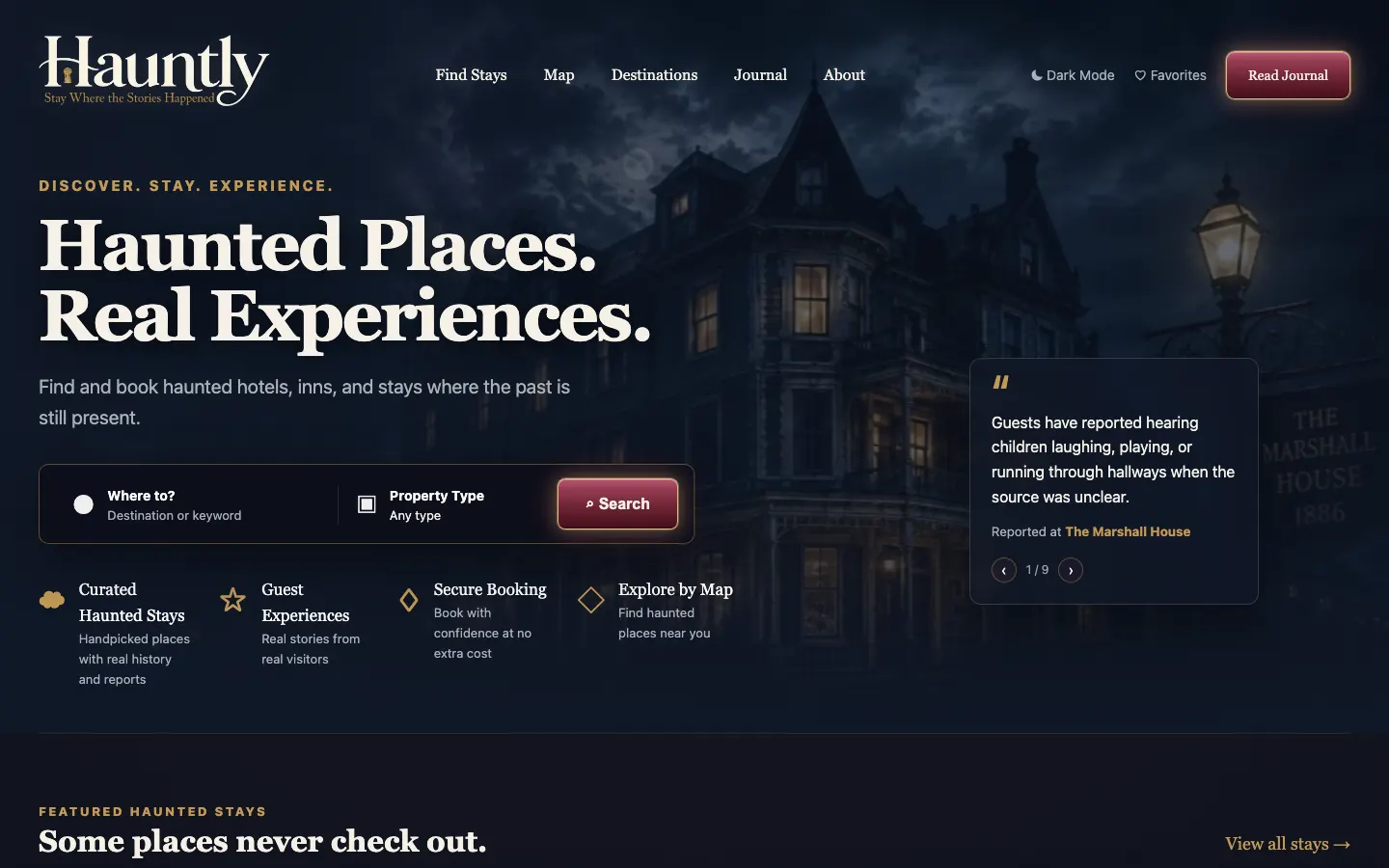
Deep night-blue backgrounds, strong architectural photography, restrained serif headlines, and quiet gold accents give Hauntly the feel of a travel publication rather than a Halloween site. There's enough atmosphere to fit the subject, and the layouts stay practical.
Discovery before conversion
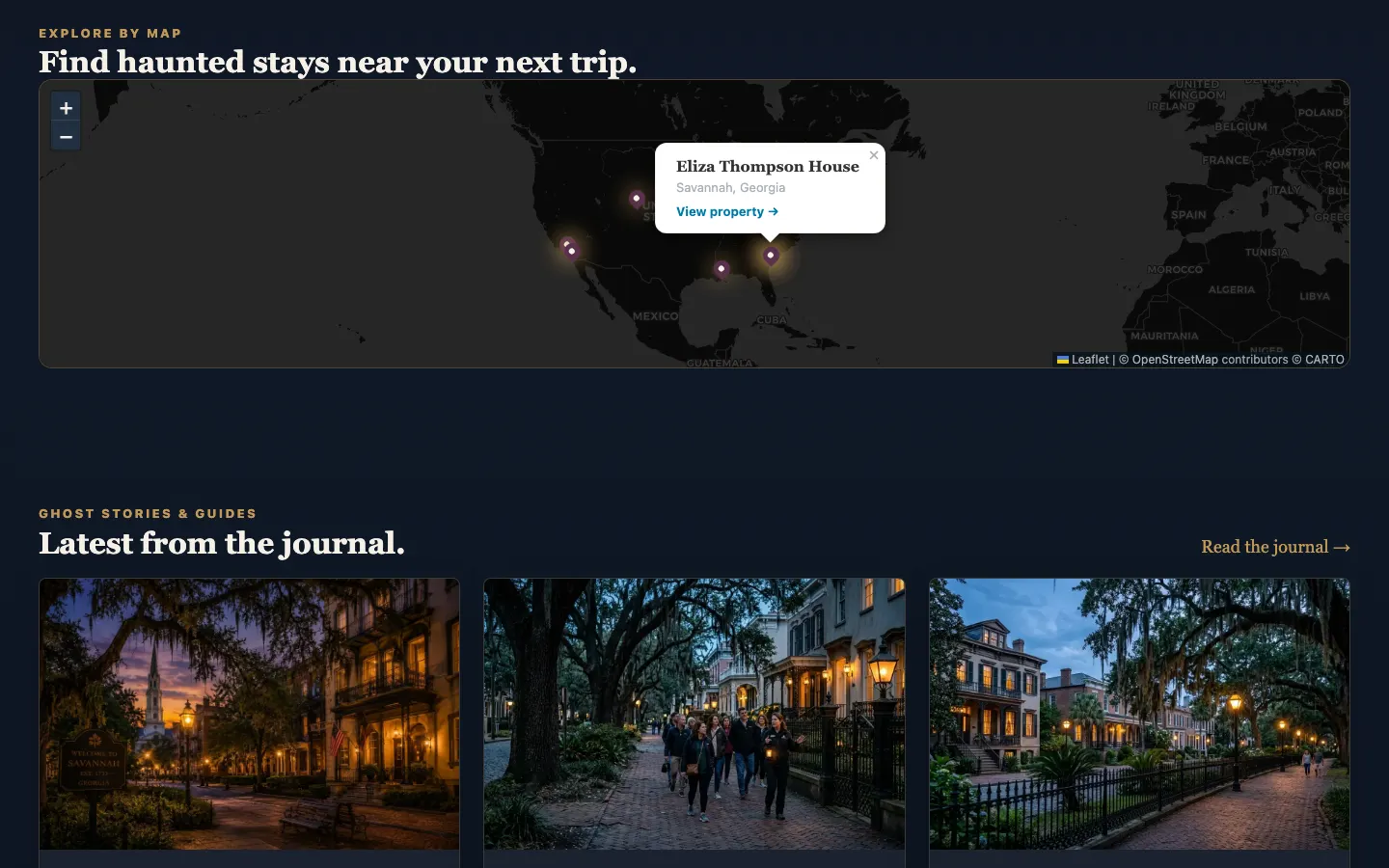
Visitors can search by destination and property type, browse the stay directory, explore the map, and read guides long before they meet a booking action. A Favorites list keeps a shortlist as they compare.
The story and the stay
Each stay guide pairs practical travel information (a quick guide, what to expect, nearby attractions, who the stay suits) with the history, reputation, and reported activity that make the place interesting. A short “Would You Stay Here?” quiz helps visitors judge the fit for their trip.
Claims handled carefully
Hauntly separates documented history from legend and guest-reported experiences instead of presenting supernatural claims as established fact. The distinction is built into the page structure, not left to a disclaimer.
04
The Traveler Journey
Arrival
A traveler arrives through search, social, a Journal article, a destination guide, or an individual haunted stay. Every entry point leads somewhere useful.
Discovery
They search by destination and property type, browse the haunted stay directory, explore the map, or start from what guests report experiencing.
Research
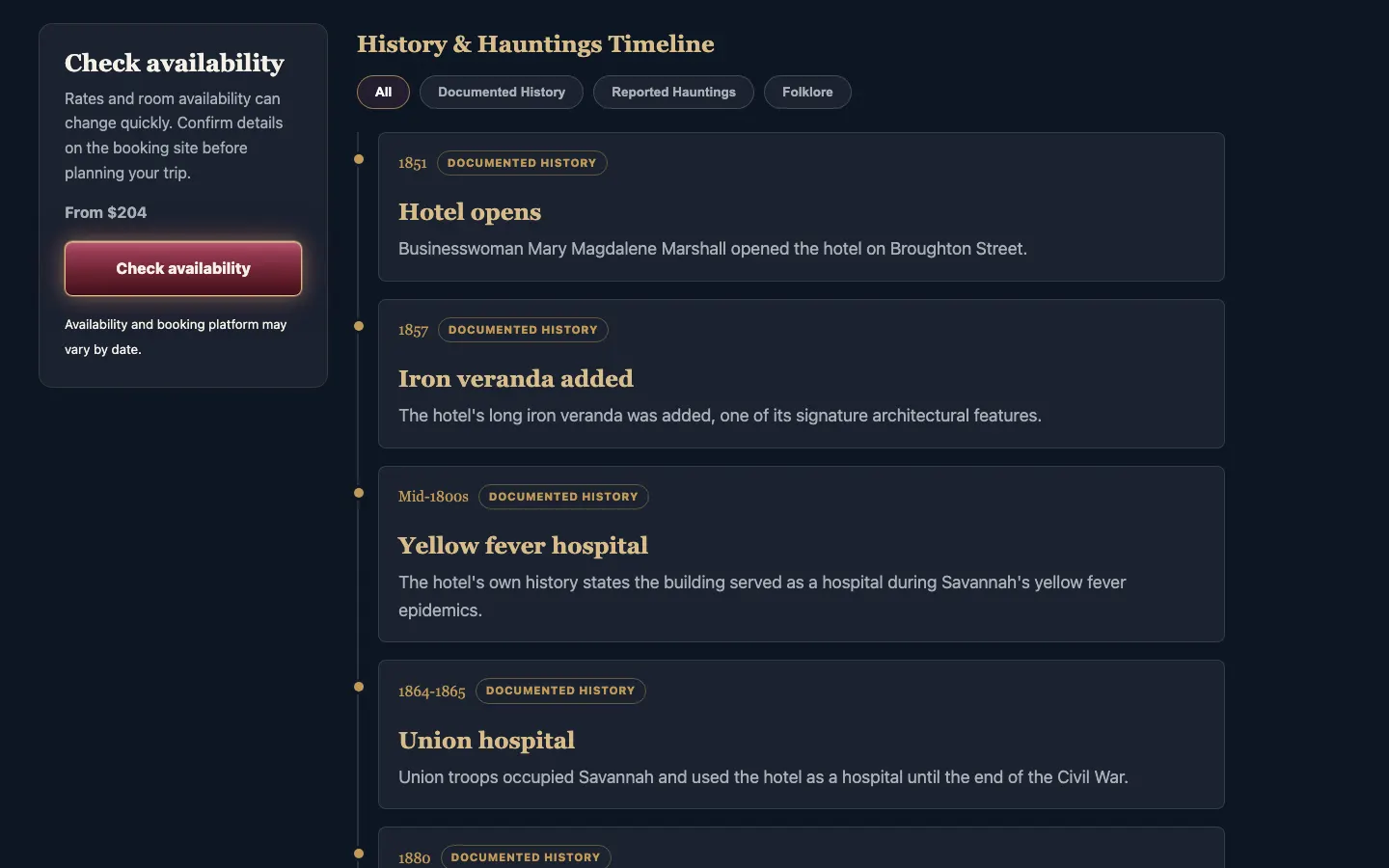
Stay guides combine a quick guide, documented history, a filterable history-and-hauntings timeline, reported activity, and plain answers to practical questions.
Exploration
Destination guides, Journal articles, itineraries, ghost-tour guides, nearby attractions, and comparable stays deepen the trip.
Action
When the traveler is ready, Check Availability connects them with the property's own booking site.
05
Search & Content Foundation
Hauntly is a search-first product. People plan haunted trips by asking questions: where to stay in Savannah, which ghost tour to book, whether a hotel is really haunted, why a city has its reputation. We designed the architecture so each kind of question has a page built to answer it, and so every page leads to the next useful one.
The site maps content to intent. Journal articles like “Why Is Savannah Considered Haunted?” serve informational searches. Destination guides serve destination searches. Itineraries and ghost-tour guides serve trip planning. Haunted stay guides serve the traveler who is close to booking. Internal links connect all four.
- Distinct, crawlable page types for haunted stays, destinations, and the Journal, each with a unique title, meta description, and canonical URL written for its intent
- Structured data matched to each page type: LodgingBusiness for stays, TouristDestination for destination guides, and Article for the Journal, with FAQPage and BreadcrumbList throughout
- Pages are prerendered, so titles, headings, content, and structured data are in the HTML that crawlers receive, not assembled later in the browser
- Destination guides work as content hubs, linking to every stay in the city, its haunted places, and each related Journal guide
- Stay guides link back to their destination, out to nearby attractions, and across to comparable stays; Journal articles link to the destination guide and bookable stays
- Question-driven FAQs on stays, destinations, and articles (“Is The Marshall House really haunted?”, “Is October the best time to visit haunted Savannah?”) written to be quoted accurately by search engines and AI assistants
- “Most haunted” discovery content framed around places travelers can legitimately visit, rather than lists of places no one can get into
- Long guides with an on-page table of contents and anchored sections, plus an XML sitemap and a robots.txt that explicitly welcomes AI answer engines
06
Editorial Trust
A travel site that covers alleged paranormal activity is only useful if readers can tell what is documented and what has been reported. We treated that as a product problem, not a legal footnote. Trust is part of the product.
Hauntly's published Editorial Standards set an explicit order: documented history first, the travel experience second, reported hauntings and folklore third. The page templates are built to keep those layers visibly distinct.
- Documented history comes first, researched in archives, property records, museums, newspapers, and other credible sources, and uncertainty is stated when sources disagree
- Legends and folklore are attributed and labeled as such, not quietly upgraded to fact
- Paranormal experiences are presented as reports (“Guests have reported…”) rather than established events
- Timeline entries carry a Documented History, Reported Hauntings, or Folklore label, and visitors can filter by type
- Practical travel information (location, property type, family suitability, what to expect) stays clear and separate from the stories
- A published Affiliate Disclosure states that commercial relationships don't buy coverage, and a corrections process invites historians, properties, and readers to submit sources
07
The Mobile Experience
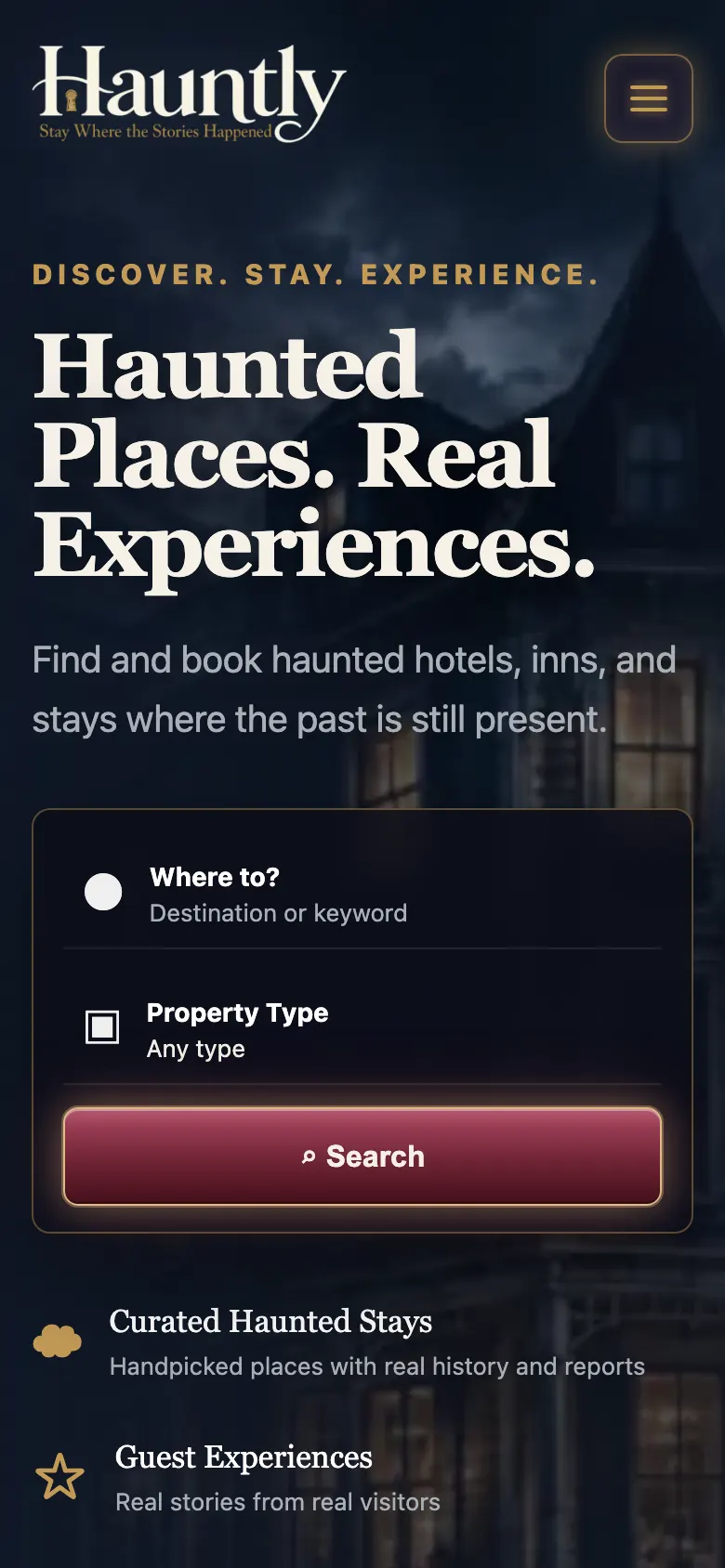
Haunted travel is often researched on a phone, from a search result or a social link while planning a trip, or while already standing in the city. On mobile, the first screen keeps the headline and a stacked destination and property-type search in view, with the navigation folded into a single menu.
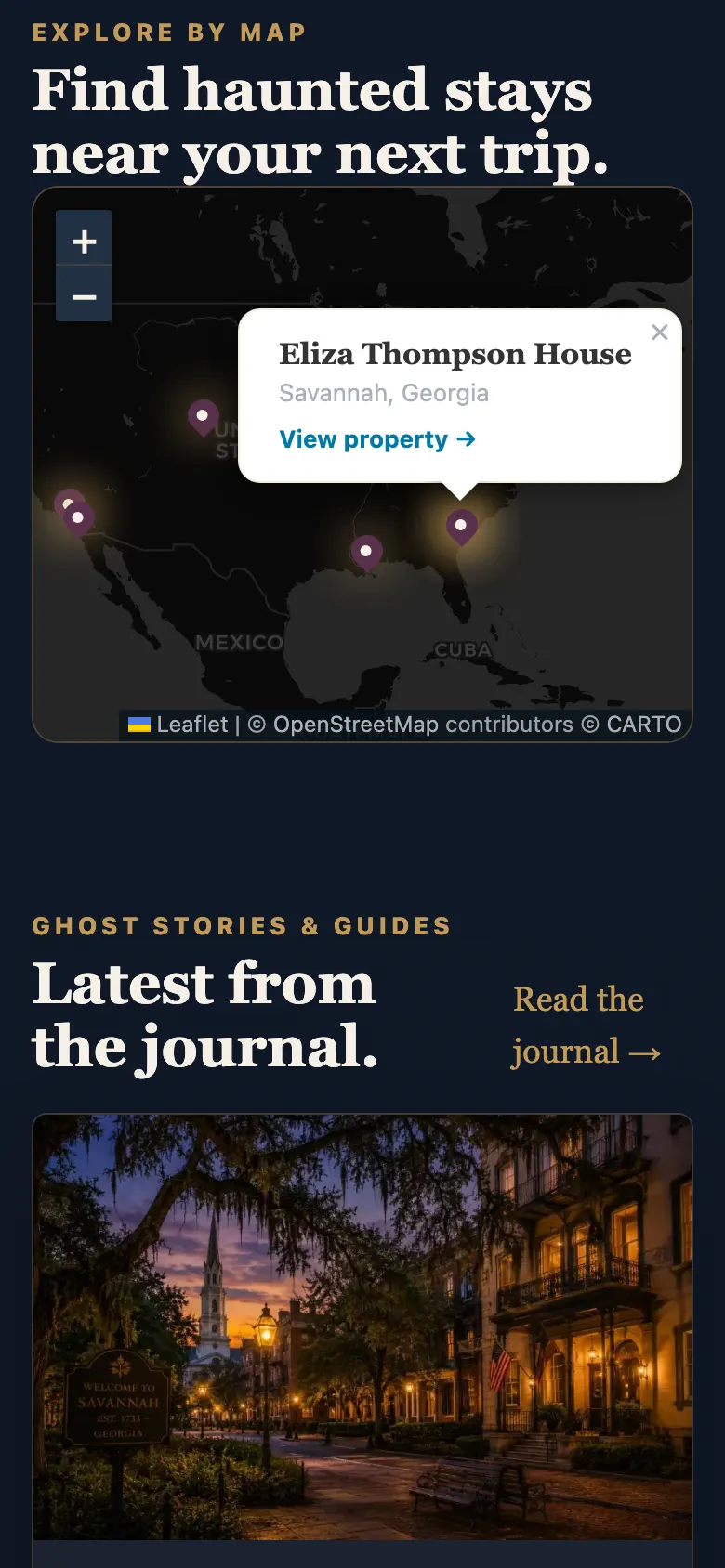
Stay guides reflow into single-column sections with readable long-form type, so a traveler can work through the history, reported activity, and practical details comfortably. Favorites, the map, and the Check Availability action all remain within reach, and the atmosphere carries through without costing usability.
08
The Result
Hauntly became more than a collection of ghost stories. The finished site connects haunted stays, destinations, reported experiences, editorial guides, and booking pathways in one structured travel platform, with an editorial system that keeps history, folklore, and reported experience honest.
The project shows what happens when content, search, user experience, and business strategy are planned together from the beginning instead of treating SEO and content as additions after the website is designed. New destinations, stays, and guides slot into an architecture that already knows how to connect them.
Related services: Custom Websites · SEO Foundations · Pricing
Next: Sovereign Tea Sanctuary →